
Fire doors that do not close, do not latch, or are held open with wedges are one of the most common fire inspection findings. We inspect and repair fire-rated doors, closers, hinges and panic hardware for buildings across Toronto and the GTA.
A fire door is part of a building’s fire separation. Its job is to close on its own and latch, so that smoke and fire stay on one side long enough for people to leave and for firefighters to work. A fire door that is propped open, that stops a few centimetres short of the frame, or that will not latch is not doing that job.
Fire doors also take some of the hardest use in a building: stairwell doors, corridor doors, garbage and electrical room doors and exit doors are opened constantly, slammed, wedged and kicked. Closers wear out, hinges sag and latches stop catching.
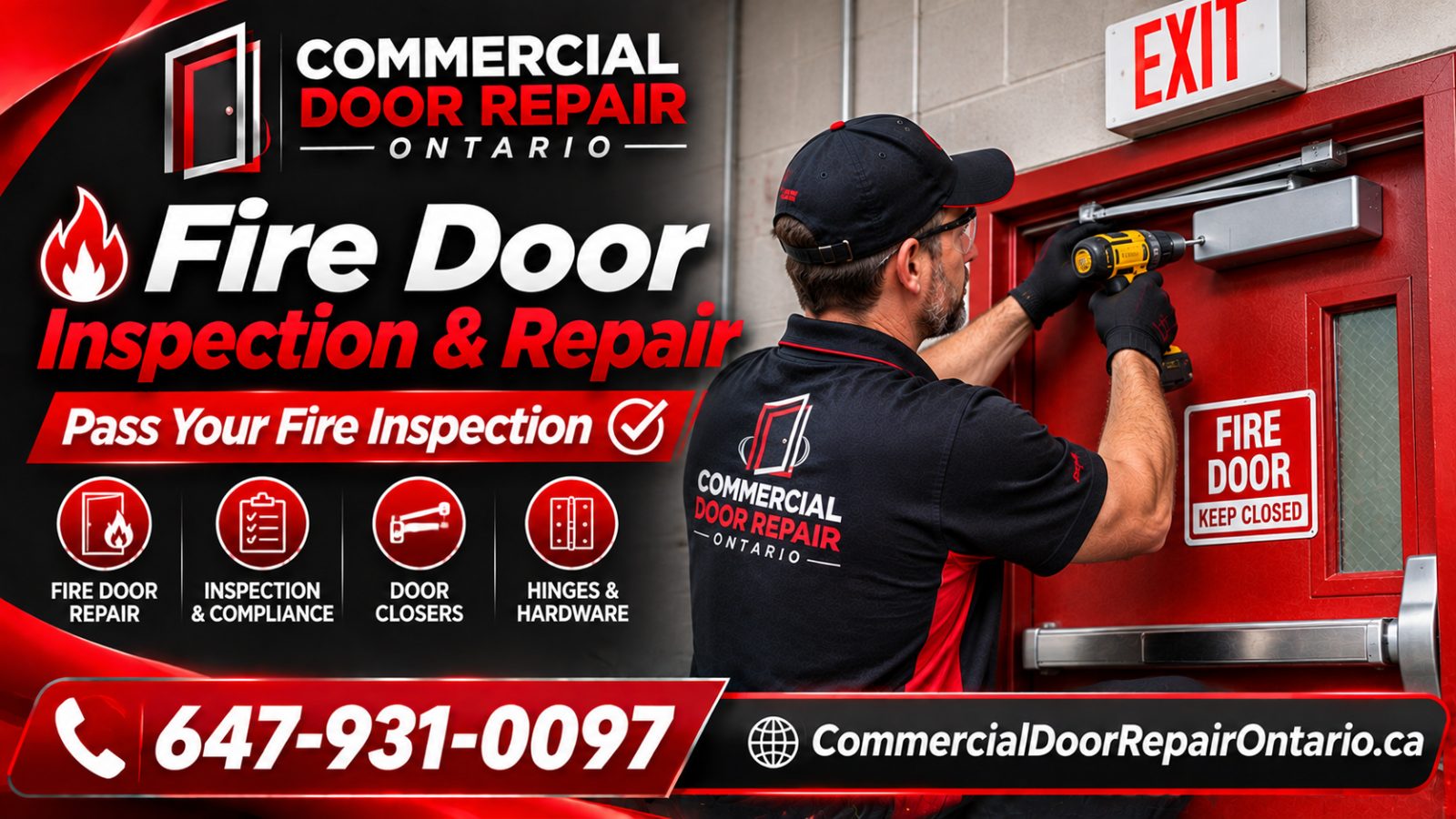
A weak, leaking or badly adjusted closer leaves the door hanging open. We repair or replace the closer and set it to close and latch from any open position.
The latch misses the strike because the door has dropped or the frame has shifted. Hinge and strike repairs bring it back into line.
Where a door needs to stay open, it must be held by a device that releases on fire alarm. We install magnetic hold-opens and closers with release features where appropriate.
Holes, dents and bent frames can compromise the door. Some damage is repairable; serious damage means replacement with a rated door or frame.
Non-rated hardware, extra holes, removed closers or added locks that defeat latching are common findings.
Exit devices must release with one motion and relatch. See panic bar and exit device repair.
Fire door requirements in Ontario come from the Ontario Fire Code and the standards it references. Building owners are responsible for keeping closures in good working order. When we check a fire door, we look at:
We report what we find in plain language and fix most deficiencies on the same visit. For formal inspection reports required by your fire safety plan, we recommend confirming the specific requirements with your fire inspector or fire safety consultant.

Replacing worn closers with rated units and adjusting sweep and latch speed so the door closes reliably without slamming. See commercial door closer repair.
Replacing worn hinges with hinges suitable for fire-rated openings, and repairing hinge reinforcement in steel frames.
Realigning or replacing latches, strikes and lever sets so the door positively latches.
Repairing minor damage, replacing rated doors and frames when damage is too severe. See hollow metal and steel door repair.
Installing magnetic door holders connected to the fire alarm system (with your alarm contractor) so doors can stay open day-to-day and close on alarm.
Stairwell doors, corridor doors and garbage room doors take constant use. Residents often wedge them open, which wears closers and hinges.
Stairwell doors and service room doors are often forgotten until an inspection.
Rear exit doors double as delivery doors, so panic hardware and closers wear quickly. See fire exit doors.
High traffic and strict safety expectations make reliable closing essential.
A fire-rated opening is more than the door itself. The rating depends on every part working together:
Usually hollow metal with a rated core, or a rated wood door. Labels on the edge identify the rating.
A rated steel frame, properly anchored to the wall. A damaged or poorly anchored frame can let the door pull away from the latch.
Steel hinges of the right size and number hold the door in place during a fire. Missing screws or worn hinges let the door sag and fail to latch.
The closer makes the door self-closing. Without it, the door can stay open in a fire.
Positive latching keeps the door closed when fire pressure builds. A door that closes but does not latch can be pushed open by heat and smoke.
Large or uneven gaps around the door let smoke through. Some doors also have intumescent or smoke seals.
Suite entry doors in many condos are fire-rated and must self-close. Residents sometimes disconnect closers or add locks; corridor and stairwell doors get wedged. We work with property managers to bring doors back into working order and to keep them there with regular checks.
Stairwells, corridors, service rooms and rear exits. Doors used for deliveries need tough closers and hinges.
Kitchen and rear exit doors face grease, heat and constant use. Panic hardware and closers wear quickly.
Rated doors between production areas, offices and storage, plus exit doors to the outside.
Replacement is the right call when the door or frame is badly damaged, when the label is missing and the rating cannot be confirmed, or when the door has been altered in ways that cannot be corrected. We supply and install rated doors and frames with compliant hardware. See hollow metal door repair and commercial door replacement.
Under the Ontario Fire Code, the building owner is responsible for maintaining fire separations and their closures, including fire doors.
Minor damage can often be repaired. Serious damage to a rated door or frame usually means replacement with a rated assembly.
Only hardware suitable for the rated opening should be used, and it must not prevent the door from latching or people from exiting. Ask us before adding anything.
Only with a device that releases the door automatically on fire alarm. Wedges and hooks are not acceptable.
Yes. Call 647-931-0097 to book fire door repairs anywhere in Toronto and the GTA.
Door closer repairPanic bar & exit devicesHollow metal & steel doorsAutomatic door repairOverhead & roll-up doorsLoading dock doorsAluminum door repair TorontoGlass repair & replacementEmergency door repairCommercial door installationCommercial door replacementDoor frame repairDoor parts & hardwareStorefront hinge replacement Toronto
TorontoNorth YorkScarboroughEtobicokeMississaugaBramptonVaughanWoodbridgeMarkhamRichmond HillThornhillOakvilleBurlingtonMiltonHamiltonPickeringWhitbyOshawaAjaxNewmarketAuroraBarrieKitchenerWaterlooCambridgeGuelph
See the full list on our areas we serve page, or contact us for a quote.