
Commercial door hardware grades decide how long your doors survive. Two locksets can look almost identical on a supplier’s shelf, yet one will still be working smoothly after years of heavy traffic at a plaza entrance while the other starts sagging, sticking and failing within months. The difference is usually the grade. If you manage a store, office, condo, school, clinic or warehouse anywhere in Ontario, understanding hardware grades is one of the easiest ways to cut repair calls and keep your building secure.
This guide explains what the ANSI/BHMA grades mean, which grade belongs on which door, how grades apply to locks, closers, exit devices and hinges, and how to spot under-specified hardware before it fails. It is written from what our technicians see every day on commercial door repair calls across Toronto and the GTA.
What Are Commercial Door Hardware Grades?
In North America, door hardware is tested and graded under standards published by the Builders Hardware Manufacturers Association (BHMA) and accredited through ANSI. Each product family has its own standard in the A156 series. Locks, closers, exit devices, hinges and other components are put through cycle tests, strength tests, security tests and finish tests, then rated into grades.
The basic rule is simple:
- Grade 1 is the highest level. It is designed for heavy-duty commercial and institutional use: busy entrances, schools, hospitals, industrial buildings and anywhere doors get abused.
- Grade 2 is a middle level suited to light commercial use and better residential applications, such as interior office doors with moderate traffic.
- Grade 3 is the entry level, intended mainly for residential use. It does not belong on a busy commercial door.
Grades are not marketing labels. A product carrying a BHMA grade has passed a defined set of tests. When a component does not list a grade at all, treat it with caution on any commercial door.
Why the grade matters more on commercial doors
A front door on a house might open a few dozen times a day. A coffee shop entrance in downtown Toronto, a condo lobby in North York or a staff door at a distribution centre in Brampton can cycle hundreds or thousands of times a day. Commercial doors are also heavier, often made of steel or aluminum and glass, and they face more abuse: carts, dollies, kicks, wind load and people pushing on the wrong side. Hardware that is perfectly fine at home will wear out quickly under that load.
Hardware Grades by Component
Every part of a door assembly has its own standard and its own grade. A strong door is only as reliable as its weakest component, so it pays to look at each one.
Commercial locks and latches
Cylindrical locks, mortise locks and deadbolts each have their own BHMA standards. For commercial entrances, mortise locks are generally considered the most durable option, and Grade 1 cylindrical locks are common on interior commercial doors. Lower-grade locks on high-traffic doors tend to develop loose levers, worn latches and cylinders that bind.
Signs your lock is under-graded
- Levers that droop or wobble after a short time in service.
- Latches that stop retracting fully, so the door catches on the strike.
- Keys that stick or turn roughly even after lubrication.
- A lock that has been replaced more than once in a short period on the same door.
If any of those sound familiar, our commercial lock repair and rekey service can assess the door and recommend a lock that suits the traffic level.
Door closers
Door closers take a huge amount of stress, especially on heavy exterior doors exposed to wind and temperature swings. Closers are graded under their own BHMA standard, and Grade 1 closers are the normal choice for commercial entrances. A light-duty closer on a heavy steel or aluminum door will leak oil, lose control of closing speed and eventually let the door slam or fail to latch.
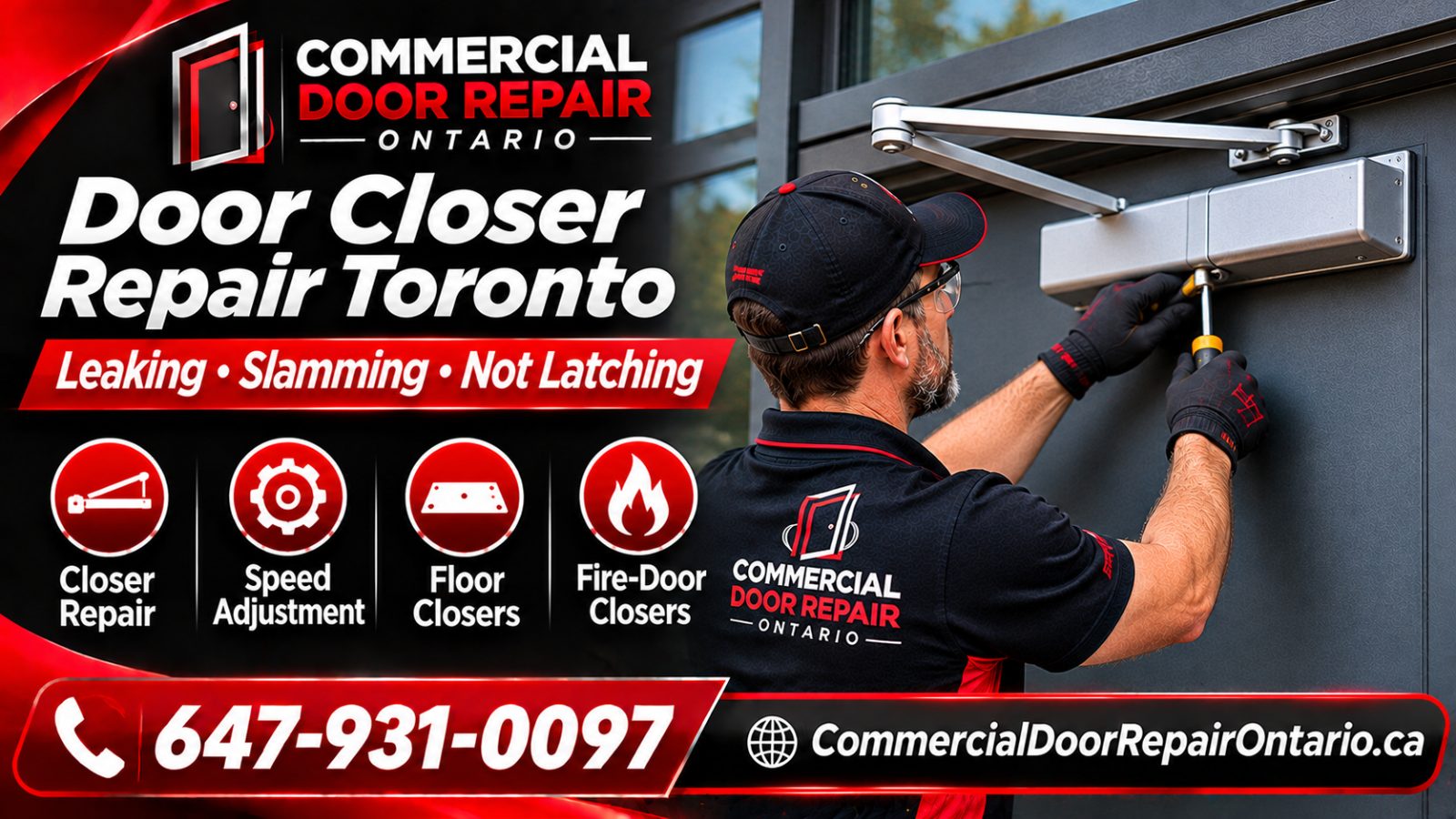
Our commercial door closer repair team replaces leaking and under-sized closers every week, and our commercial door closer problems guide explains the warning signs in more detail.
Panic bars and exit devices
Exit devices, often called panic bars or push bars, are life-safety hardware. They have to release the door with a single push in an emergency, every time. They are graded under their own BHMA standard, and fire-rated doors require exit devices that are listed for use on fire doors. Under-specified or worn exit devices are one of the most common problems we find during inspections.
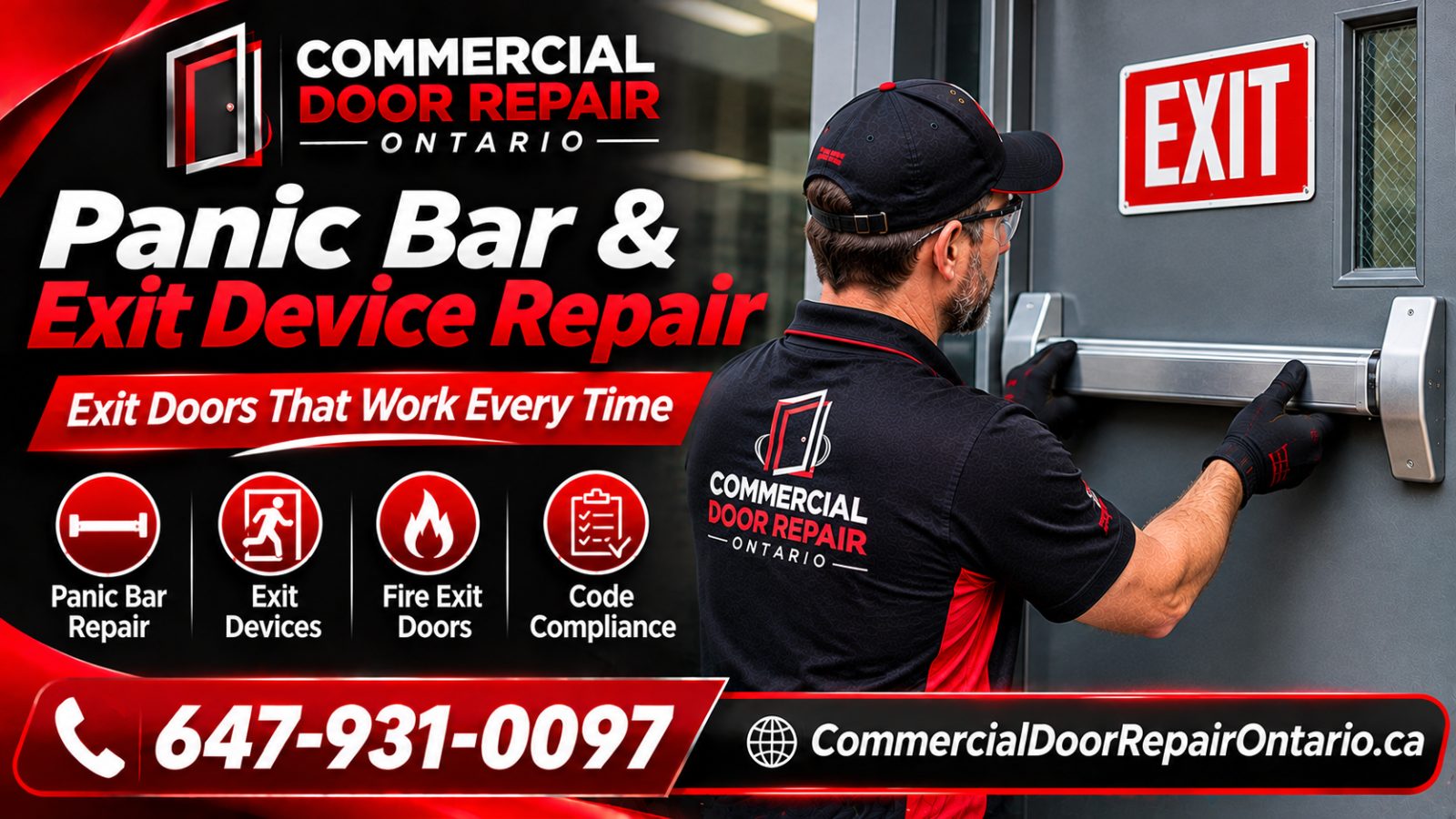
Learn more on our panic bar and exit device repair page or read the panic bar repair and installation guide.
Hinges, continuous hinges and pivots
Hinges carry the full weight of the door and take the leverage every time someone pulls on the handle. Butt hinges, continuous hinges and pivots each have their own standards. Heavy commercial doors usually need heavy-weight ball-bearing hinges, continuous geared hinges or properly rated pivots. Under-sized hinges cause sagging, which then causes the door to drag, the latch to miss the strike and the closer to work harder.
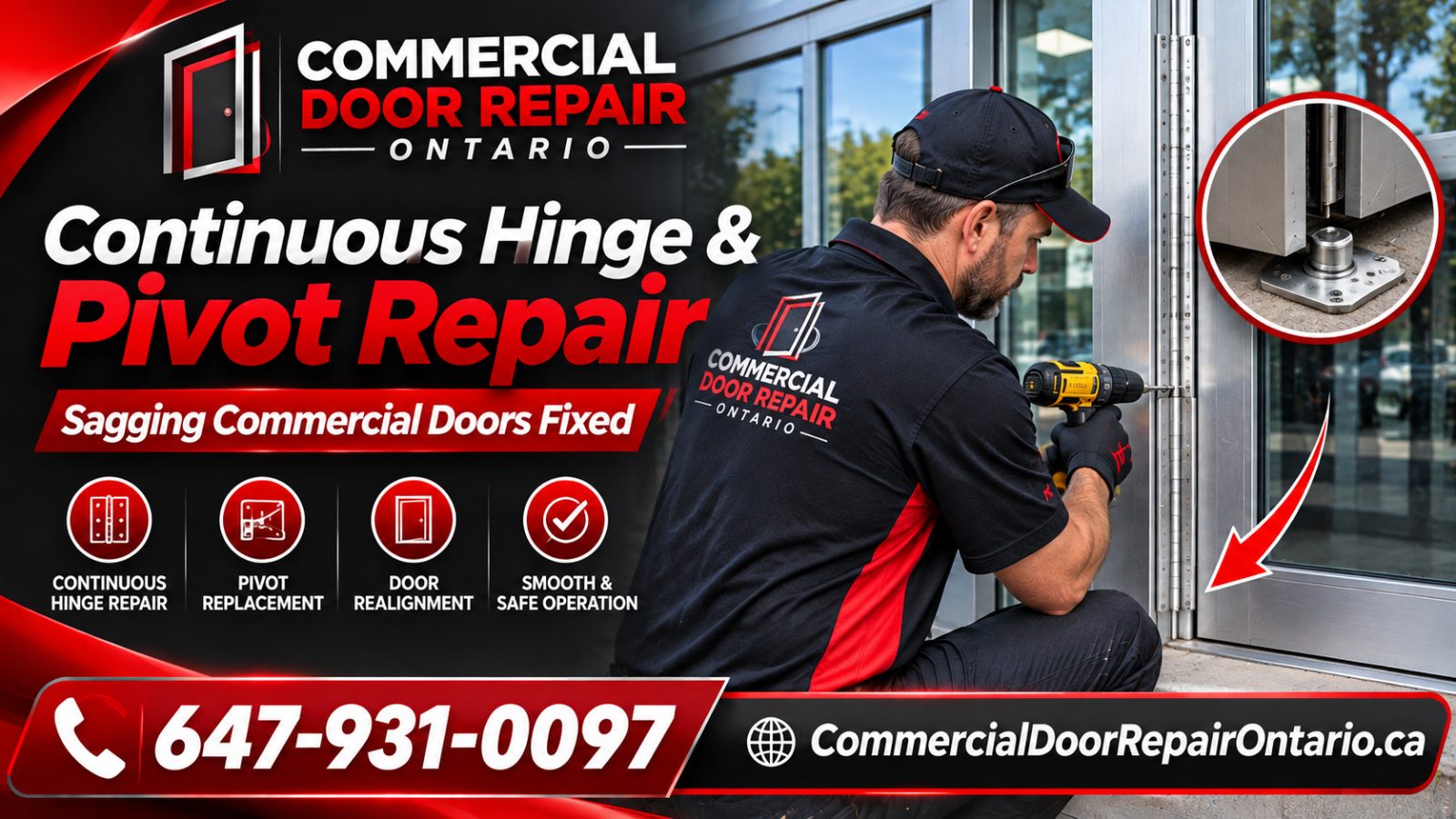
When hinges or pivots fail, our continuous hinge and pivot repair service can upgrade the door to hardware that matches its weight and use.
Electric strikes and mag locks
Access control hardware has its own performance standards too. An electric strike must be strong enough for the door and compatible with the lock and the fire rating. A mag lock must be installed with the correct release devices so people can always exit. We see many access control problems that are really hardware compatibility problems. See our electric strike and mag lock repair page for details.
Which Grade Belongs on Which Door?
Here is a practical guide based on the types of buildings we service across Ontario.
| Door location | Typical traffic | Recommended grade |
|---|---|---|
| Main retail or plaza entrance | Very high | Grade 1 |
| Condo lobby and vestibule doors | Very high | Grade 1 |
| Restaurant back and service doors | High, abusive | Grade 1 |
| Stairwell and fire exit doors | Variable, life safety | Grade 1, fire-rated where required |
| Warehouse man doors | High, abusive | Grade 1 |
| Interior office doors | Moderate | Grade 1 or Grade 2 |
| Storage closets, low-use rooms | Low | Grade 2 |
Retail and plaza entrances
Storefront doors in plazas and on main streets take constant traffic and are often aluminum and glass. They need Grade 1 closers or floor closers, heavy-duty pivots or continuous hinges and strong locks. Our storefront door repair and plaza and retail door repair services focus on exactly these doors.
Condo and apartment buildings
Lobby doors, garage vestibule doors and corridor fire doors in condos see heavy use around the clock. Property managers who standardize on Grade 1 hardware usually see far fewer service calls. Visit our condo lobby door repair page for building-specific advice.
Restaurants and food service
Back doors in restaurants get kicked open with full arms, propped with wedges and exposed to grease and moisture. Light-duty hardware does not last. See restaurant back door repair for common problems and fixes.
Industrial and warehouse buildings
Man doors beside loading docks and overhead doors take abuse from forklifts, carts and wind. Heavy hollow metal doors need heavy hinges and closers. Our hollow metal and steel door repair service and the hollow metal door frame replacement guide cover these doors in depth.
Fire-Rated Doors and Code Requirements in Ontario
Fire doors are a special case. A fire-rated door is a tested assembly: the door, frame, hinges, latching hardware, closer and any glazing work together. Replacing a component with non-listed hardware can compromise the rating. In Ontario, building owners have ongoing duties to inspect and maintain fire doors and closures under the Ontario Fire Code (O. Reg. 213/07), and doors must close and latch properly.
When you replace hardware on a fire door, make sure the new component is listed for fire door use and compatible with the existing assembly. Our fire door inspection and repair service checks closers, latching, gaps and labels, and our fire exit door team installs compliant exit hardware.
Accessibility considerations
Ontario businesses also need to think about accessibility. Heavy doors with stiff closers can be hard for many people to open. Automatic operators and properly adjusted closers help. See our accessible door operator installation and automatic door repair services.
How to Check the Grade of Your Existing Hardware
You do not need to be a hardware specialist to get a rough idea of what is on your doors.
- Check the packaging or spec sheet. If you have the original submittals or the hardware schedule from construction, the grade is usually listed.
- Look for markings. Many closers and exit devices carry the manufacturer and model number on the body or under the cover. Search the model to find the grade.
- Look at the weight and build. Commercial Grade 1 hardware is usually noticeably heavier and more solid than residential hardware.
- Look at the failure history. If the same component keeps failing on the same door, it is often under-specified for that location.
- Ask a technician. During a service call we can identify most hardware and tell you whether it suits the door.
The Real Cost of Under-Specified Hardware
It is tempting to save money with cheaper hardware, especially when a door fails unexpectedly and you need it secured today. But in our experience, lower-grade hardware on a busy commercial door usually costs more over time:
- Repeat service calls for the same failing part.
- Security risk when a lock or latch stops engaging and the door is left unsecured overnight.
- Collateral damage as a failing closer lets the door slam and wears out hinges, frames and glass.
- Code issues if a fire door or exit door stops closing and latching properly.
- Downtime when a storefront or loading door is out of service during business hours.
A planned upgrade during a scheduled visit is almost always cheaper than an emergency replacement. Many of our clients combine upgrades with our commercial door maintenance program, and our commercial door winter maintenance checklist is a good place to start before the cold sets in.
Upgrading Hardware Without Replacing the Door
In many cases, the door and frame are still in good shape and only the hardware needs upgrading. Common upgrades we perform include:
- Replacing a light-duty closer with a Grade 1 closer and adjusting it for the door weight and wind conditions.
- Converting butt hinges to a continuous hinge on a heavy door that keeps sagging.
- Replacing a worn rim exit device with a heavier model or a mortise-style device.
- Upgrading a cylindrical lock to a mortise lock at a main entrance.
- Adding a reinforced strike or frame repair after a break-in. See commercial board-up and break-in door repair and door frame repair.
When a door really is beyond repair, our commercial door replacement and commercial door installation teams can supply and install a complete new assembly with the right hardware from day one.
Quick Hardware Grade Checklist for Property Managers
- List every exterior and fire-rated door in the building.
- Record the lock, closer, exit device and hinge type on each door.
- Mark doors with repeat failures in the last year.
- Prioritize main entrances, fire exits and service doors for Grade 1 upgrades.
- Schedule upgrades during planned maintenance rather than waiting for failures.
- Keep spare cylinders and keys organized and up to date.
Service Areas
We service commercial doors across Toronto and the GTA, including North York, Vaughan, Burlington, Milton, Whitby, Guelph and Kitchener. For panic hardware specifically, see our pages for Mississauga, Brampton and Hamilton. The full list is on our areas we serve page.
Frequently Asked Questions
What is the difference between Grade 1 and Grade 2 door hardware?
Grade 1 is tested to the highest performance level for durability, strength and security and is designed for heavy commercial use. Grade 2 is designed for light commercial and better residential use. For busy commercial entrances, Grade 1 is the safer choice.
Is Grade 1 hardware required by code?
Building and fire codes focus on performance, such as fire ratings, egress and accessibility, rather than a single grade for every door. However, many specifications, insurers and building owners require Grade 1 on commercial doors because it lasts longer and reduces failures.
Can I put residential hardware on a commercial door?
It may physically fit, but it usually wears out quickly under commercial traffic. On fire-rated doors and exit doors, hardware must also be listed for that use.
Why does my commercial door closer keep leaking?
Leaking closers are often under-sized for the door weight, exposed to wind or extreme temperatures, or simply worn out. Upgrading to a properly sized Grade 1 closer usually solves the problem.
How often should commercial door hardware be inspected?
High-traffic doors benefit from regular inspection, and fire doors must be inspected and maintained under the Ontario Fire Code. A scheduled maintenance program helps catch problems early.
Do you supply the hardware or do I need to buy it?
We supply and install commercial-grade hardware, including locks, closers, exit devices, hinges and access control components. See our door parts page for more.
Get the Right Hardware on Your Doors
Commercial Door Repair Ontario is licensed and insured, with 24/7 emergency service and technicians who reach most GTA locations within 15 to 30 minutes. Whether you need a single closer replaced or a full hardware upgrade across a building, we can help. Explore our commercial door services, learn about us, or book emergency door repair if a door will not lock right now.
Call Commercial Door Repair Ontario: 866-344-4939
You can also send us a message through our contact page, read about commercial overhead door problems, check our commercial glass door repair and aluminum door repair services, or return to the Commercial Door Repair Ontario homepage.